

Shared Grief and the Measure of Humanity
The Visual Narrative
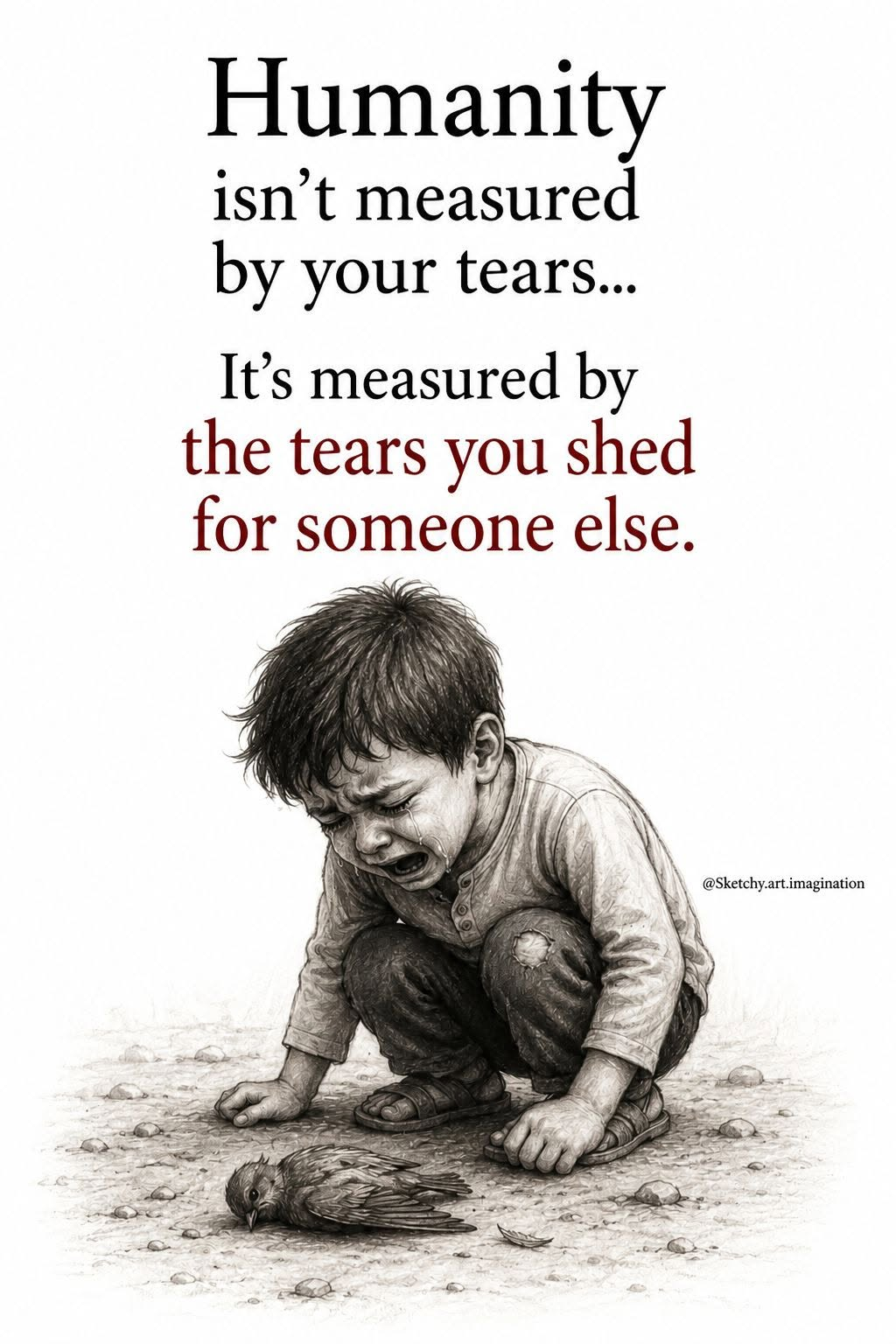
The artwork presents a striking study in vulnerability. Rendered in monochromatic sketch tones, a child crouches low on rough ground, hands planted in the dirt, weeping over a small, motionless bird. Above the scene, the text anchors the emotional weight:
“Humanity isn’t measured by your tears… It’s measured by the tears you shed for someone else.”
The choice of imagery is intentionally pure. A child possesses no grand ideological framework or self-serving motives. The fallen bird offers no utility, status, or transactional value. Yet, the child’s grief is total and uninhibited. This contrast between the fragile life on the ground and the raw distress of the observer turns a quiet moment into a profound moral statement.
Moving Beyond Self-Regarding Sorrow
Pain is an unavoidable aspect of existence. However, grief that remains entirely self-focused can isolate us, trapping consciousness inside personal suffering.
True moral maturity begins when grief transcends the self. To feel anguish for the suffering of another—especially a creature entirely separate from our personal survival—requires stepping outside our own ego. It demands an acknowledgment that life outside ourselves has intrinsic worth.
 Self-Centered Sorrow                  Vicarious Empathy
┌────────────────────┐                ┌────────────────────┐
│  Focus: My pain    │   ─────────►   │ Focus: Their pain  │
│  Result: Isolation │                │ Result: Connection │
└────────────────────┘                └────────────────────┘
The Moral Imperative of Compassion
The quote suggests that humanity is not defined merely by capacity to feel, but by where our feelings are directed.
- Innate Connection: Empathy is not a habit we learn through social conditioning; it is an organic response to the world’s shared vulnerability.
- The Dissolution of Boundaries: Shedding tears for another breaks down the barrier between “me” and “them,” recognizing that all life shares a common thread.
- From Feeling to Stewardship: Recognizing another’s pain is the foundational requirement for active care, justice, and protection of the vulnerable.
Ultimately, the piece reminds us that our highest human quality isn’t found in strength, intellect, or self-preservation—it is measured by the depth of our capacity to care for the fragile lives around us.