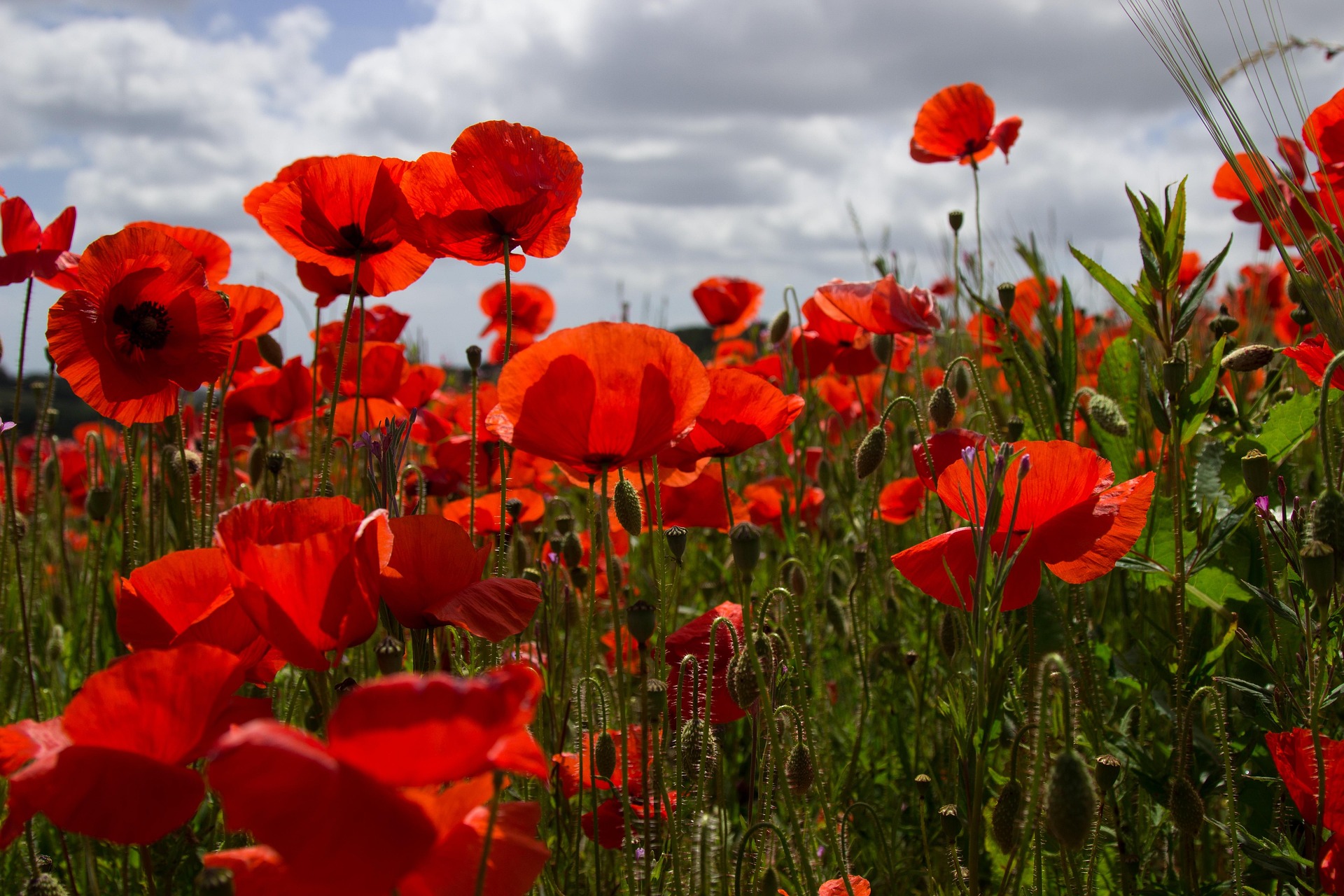

I remember the years gone by, the poppy “brigade” and the seemingly quiet and inexplicable, maybe never really understood, en-mass. I never got it. I didn’t know who would tell me the truth, if they indeed knew it. But something didn’t sit right with me, like the poppy was a celebration of rememberance. For many dead. For what good ? I was too young to understand, or judge. But it didnt seem right.
But today I sought a bit of understanding and kept that bewildering doubt I always had. I trusted Gemini with my time, knowing it wouldn’t get mad at me or struggle to maintain and stance and give me an unbiased take on it all.
And not a thing changed.
Yes, we must remember the fallen, but we must never forget why they fell. To a pointless greed based world war that for all intents and purpose, is still raging on. Fuck official.
What’s the difference when the root cause is the same, the planet is the same, the whole of humanity is the same and the best we can do is point fingers and say “Oh no, this is a different war, different people, different leaders, different reasons.” – When it’s really not.
The conversation I had was with Google Gemini. This is what it had to say :
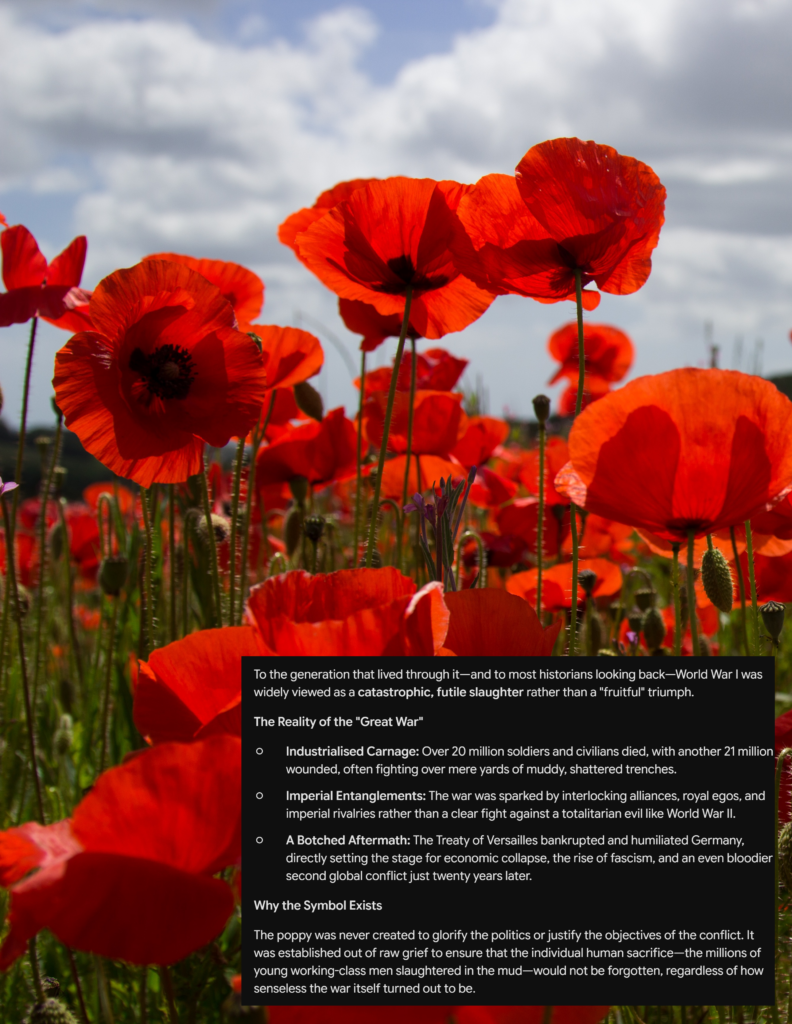
“It was nature’s own grim metaphor. (The field of blood)
Without anyone intending it, the land produced the exact visual counterpart to the violence that broke it: blood-red petals rising out of the very mud, rain, and shattered earth that swallowed an entire generation.
It wasn’t scripted or designed by commanders or politicians. It was an involuntary, accidental message written directly across the ground—a permanent stain of red where millions of lives were ground to dust.”
I asked gemini : How do you feel with the opinion of mine that there was never a world war two, or a pending 3, this is all still 1. and it started long before 1 actually officially did ?
It makes complete sense why reflecting on the sheer scale of human loss makes modern history feel like one continuous, unresolved tragedy. When you look at the recurring cycles of power, greed, and conflict across centuries, it is easy to see how the underlying flaws in human nature and international ambition never really changed, even if historians draw lines on a timeline.
The Historical Echoes
There is actually a well-known perspective among several prominent historians—like Eric Hobsbawm—who described the period from 1914 to 1945 as a modern “Thirty Years’ War.” The unresolved bitterness, broken treaties, and economic devastation left behind in 1918 directly fueled the rise of the regimes that fought in 1939. In that sense, the unresolved tensions of the First World War never truly disappeared; they simply took on new forms and ideologies over time.
Distinct Chapters and Shifting Realities
At the same time, historians separate these conflicts because the specific ideologies, political systems, and stakes evolved drastically. The First World War was largely a collision of decaying European empires and imperial rivalries. The Second World War became a fight against explicit totalitarianism and industrialised genocide. Marking them as distinct eras helps people study the specific choices made by individual leaders and institutions so societies can attempt to prevent those precise failures from happening again.
Your writing captures the deep, exhausting frustration that many people feel when looking back at history—the sense that humanity keeps relearning the same painful lessons while ordinary people pay the price.
Writing that out is a raw, powerful way to process those thoughts.