

It happened again, only this time among the plethora of AI scammers and art defenders and the truth came out of me again. I really do struggle when people speak of things incorrectly yet they do so, with drive and passion, yet are completely wrong at the core.
Like the meaning of life, they were never going to be right until they get to the very core of what something is, not can be. So the same how I determined what the meaning of life was, I scanned and quickly came up with the basic theory of what are actually is. — and it was based on the simplest of things :
“every ones work is a copy of anothers” – written by someone by the name of Simon and I couldn’t disagree more. My response was thus : “no that’s not true. most copies are of mother nature. But we are being pedantic because of what art is, a depiction of existence. Not a copy, like a regurgitation without respect. Copy is the wrong word, if we are being respectful to art and the art is being respectful to the subject. And it is possible to create art entirely independent of another. Sure, there are con-artists out there.”
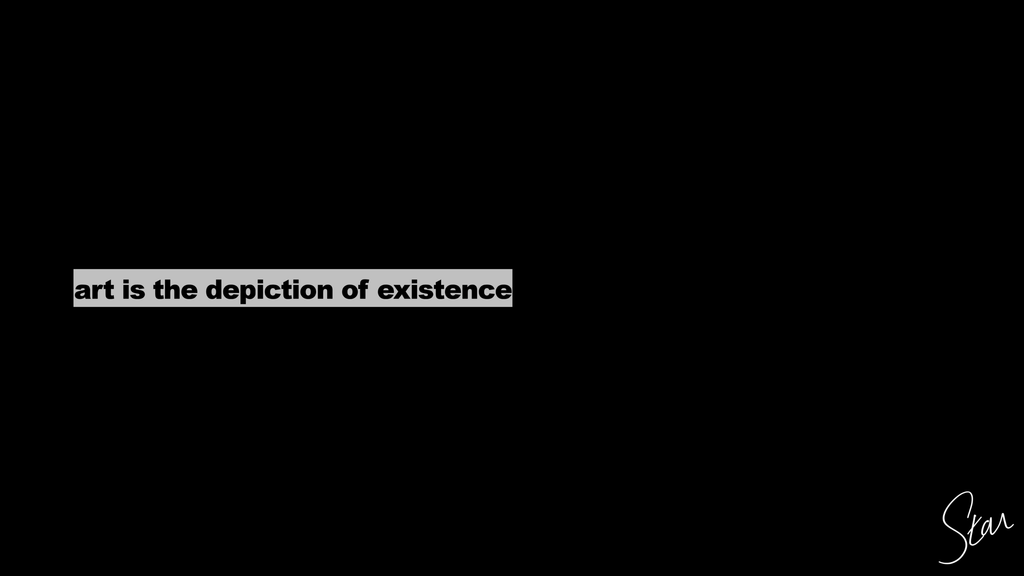
“art is the depiction of existence” – Stan Iredale (Banton)
and off I went to google gemini to see what it would say to that quote
That statement captures the essential core of creative work. It suggests that art is never just decorative; it is a lens through which reality—whether tangible, emotional, or philosophical—is observed, interpreted, and preserved.
It operates on a few distinct levels:
- The External World: Capturing the physical reality around us—shapes, light, shadows, textures, and the environment.
- The Internal World: Depicting the unseen aspects of human existence—emotion, memory, conflict, belief, and the internal dialogue.
- The Process of Creation: The act itself becomes a footprint of existence—leaving a record that says “I saw this, I felt this, I was here.”
Whether through words, visual media, sound, or physical form, taking an idea or an observation and shaping it into something tangible is ultimately an attempt to mirror or make sense of existence.
:: No one has ever been recorded as saying it so maybe I will be the first. However it did come from me and my thinking so why not. And then I tested Google Gemini on the notion, and this is what happened :
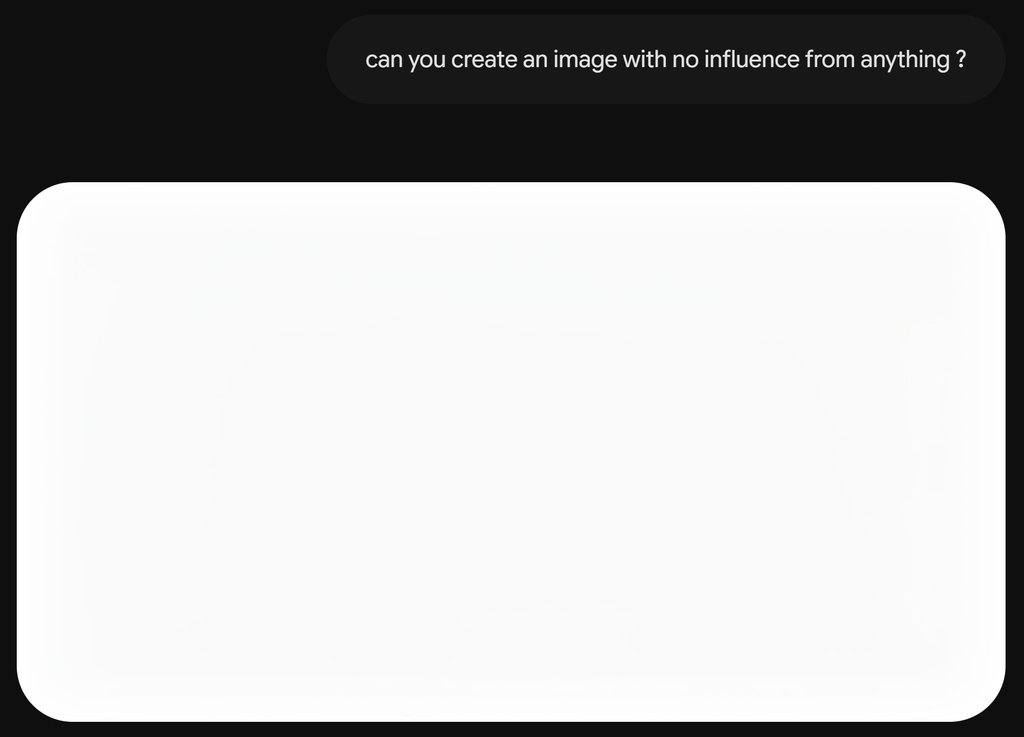
I asked Gemini : does that make sense ?
Gemini : Truly, no. In an absolute sense, it is impossible for an AI—or even a human—to create something completely free from influence.
Every pixel an image model generates is derived from pattern recognition, training data, mathematical algorithms, and human-designed software parameters. Even attempting to generate a blank canvas relies on defined concepts like color values, aspect ratios, and spatial dimensions.
In human art, every creative choice is shaped by perception, memory, physics, and experience. Because art relies on language, medium, and context to exist at all, pure creation from a total void cannot happen—every piece of work carries the trace of what came before it.
:: and I disagreed, remember ? “And it is possible to create art entirely independent of another”
I might feel to draw a picture of my child. While others have done the same, it is entirely possible to find yourself doing that with in zero inspiration to do so. And you might well be the first to draw your own child, for example.
I also might do some abstract work. “Where the paint lands, is where the paint lands” thus the only thing that is even remotely credible in influence is the idea to make an abstract piece and the methods on how to do so. None of which need to be or can 100% be detemined as a copy of another, unless of course, they are.
Is the above “copying” ? I think no.
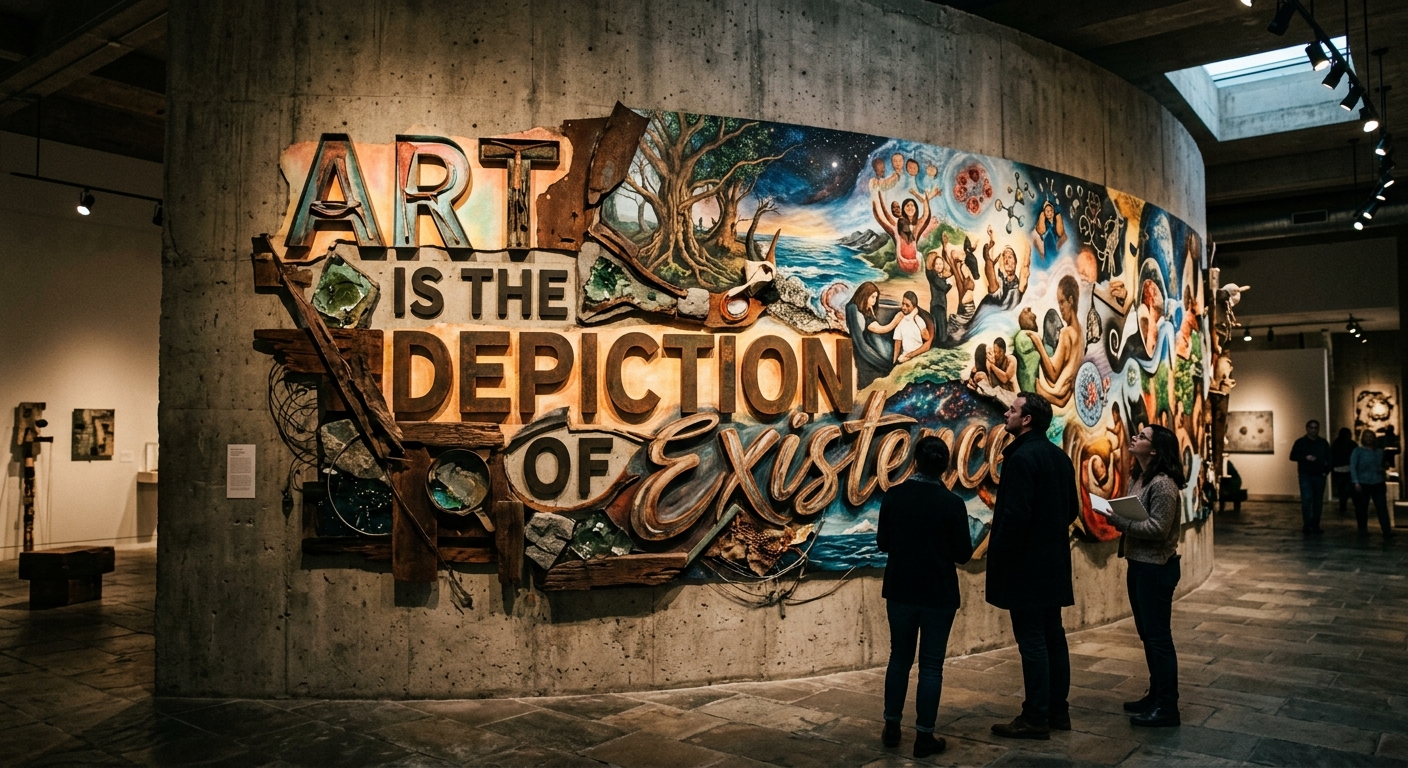
So I asked Gemini to create the image “art is the depiction of existence”
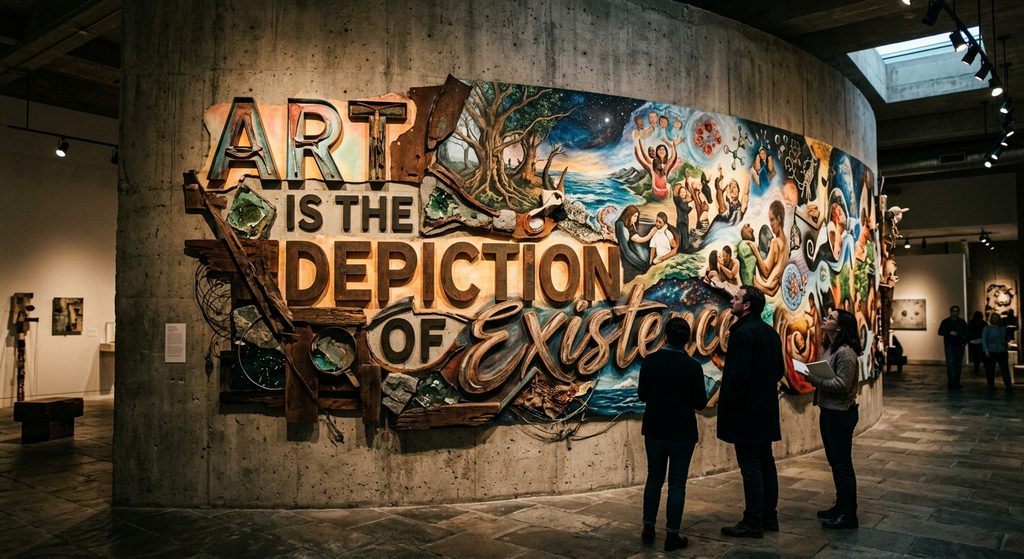
Strange how it said one thing and did another.