
A Diagnostic Guide to Seven Public Misnomers and the Mechanical Reality of Truth
Modern public discourse has become highly optimized for evasion. As a collective, society has developed a reliance on linguistic shorthand, tribal labels, and intellectual escape hatches designed to bypass analytical depth. When a system, a history, or a structural reality presents an uncomfortable truth, language is frequently weaponized to flatten nuance, shift focus, and force false symmetries.
This paper establishes a cohesive framework to dismantle these linguistic distortions. By isolating seven distinct public misnomers, we expose the gap between lazy cognitive shortcuts and the gritty, mechanical reality of things. These points serve as a diagnostic toolkit—an intellectual armor to protect objective analysis from the social and systemic pressures that seek to dilute it.
***
1. COMPREHENSION ≠ ENDORSEMENT
“Understanding fully why something happened does not mean you support it happening.”
The Public Misnomer:
The moment an individual attempts to map the root causes, mechanical pathways, or systemic failures behind an undesirable event, crime, or historical atrocity, the public knee-jerk reaction interprets the analysis as a defense. Explanation is routinely misconstrued as justification, forcing an immediate moral trial where an objective dissection was intended.
The Gritty Reality:
Analysis is objective; approval is moral. Reconstructing the precise dynamics and motives behind a disaster requires no sympathy for the outcome. In fact, a complete structural comprehension of the “why” is the solitary, uncompromising prerequisite to preventing its recurrence.
2. DIAGNOSIS ≠ IDENTITY (THE LABEL TRAP)
“Observing and stating the deadly flaws of a system does not mean you belong to an opposing ideological camp; the label is just a distraction to dismiss the critique.”
The Public Misnomer:
Public systems and media apparatuses cannot process an external critique without immediately processing the critic into a tribal bucket. If an observer highlights that a dominant socio-economic framework—such as capitalism—functions in a deadly or inherently destructive manner, they are instantly branded with a reductionist label like “Anti-Capitalist,” “Communist,” or “Marxist.”
The Gritty Reality:
Stating a diagnostic fact based on mechanical observation is an act of clarity, not a declaration of tribal allegiance to a rival ideology. The label operates as an intellectual put-down and an intentional distraction, deliberately shifting the focus away from the empirical truth of the critique and onto a pre-fabricated identity that can be easily dismissed by the status quo.
3. FALSE EQUIVALENCE ≠ RESOLUTION
“Using ‘let’s agree to disagree’ to shut down a debate on right and wrong doesn’t resolve a conflict; it’s a cop-out disguised as politeness to avoid defending an indefensible position.”
The Public Misnomer:
The phrase “let’s agree to disagree” is widely celebrated as a mature, civilized instrument of conflict resolution. It is treated as an acceptable, peaceful exit strategy for conversations that have reached an impasse.
The Gritty Reality:
When applied to fundamental matters of right, wrong, or systemic harm, this phrase is a profound act of intellectual dishonesty. It acts as a defensive cloaking device, drawing a false equivalence between a deeply considered, evidence-backed critique and a refusal to acknowledge reality. It forces a clean, symmetric compromise where none exists, masquerading as manners to avoid the discomfort of accountability or the collapse of an indefensible argument.
4. SIMPLICITY ≠ EASE (THE OCCAM’S RAZOR ILLUSION)
“Just because a solution or an explanation is conceptually simple does not mean the reality of executing it is easy; elegance in theory ignores the friction of practice.”
The Public Misnomer:
Borrowing loosely from the premise of Occam’s Razor, the public frequently treats conceptual simplicity as a metric for operational ease. If a solution can be expressed in a single, elegant sentence, it is either championed as an effortless “quick fix” or cynically dismissed as entirely naive.
The Gritty Reality:
A simple explanation strips away superfluous variables to expose a core truth, but stripping the fluff does not strip away the physical gravity, institutional friction, or entrenched resistance required to execute that truth. Recognizing the primary lever of a problem is simple; pulling that lever against a multi-billion-dollar apparatus or deep human habit is immensely difficult.
5. COMPLEXITY ≠ UNTREATABILITY (THE LEVERAGE ILLUSION)
“A messy, multi-layered tangle of problems is often far easier to resolve than a single, monolithic root cause, because a complex web gives you multiple small places to intervene and chip away at the issue.”
The Public Misnomer:
When confronted with a chaotic, multi-layered network of failures—whether in a failing socio-political structure or a chronically ill patient—people often suffer from cognitive paralysis. The sheer scale of the complexity creates the illusion that the issue is entirely untreatable unless a singular, grand, sweeping master solution can be discovered to fix everything simultaneously.
The Gritty Reality:
A monolithic problem with a single, simple, but untreatable root cause offers zero options. Conversely, a highly complex web of interconnected issues is full of distinct leverage points. By adopting a pragmatic philosophy of “rolling with the punches,” an intervener can make half a dozen small, manageable adjustments across the system. You do not need to cure the universe all at once; treating individual nodes progressively stabilizes the broader network.
6. TEMPORALITY ≠ INEVITABILITY (THE GRAVITY ILLUSION)
“The phrase ‘what goes up, must come down’ is a lazy cosmic metaphor; in both physics and human systems, things can achieve escape velocity, evolve permanently, or simply break and stay up.”
The Public Misnomer:
The aphorism “what goes up, must come down” is commonly deployed as an absolute, immutable law governing time and systems. It is utilized either as a passive comfort during severe crises (assuming the trend must naturally peak and resolve) or as a cynical weapon to dismiss progressive breakthroughs (assuming positive growth must inevitably collapse).
The Gritty Reality:
The metaphor fails fundamentally across both the physical and structural landscapes. In mechanics, an object propelled with sufficient velocity (11.2 km/s on Earth) achieves escape velocity, breaking free from gravitational bounds entirely to journey upward permanently. In human history and sociology, knowledge, microplastics, and systemic damage do not automatically descend or heal. Systems frequently reach an escape velocity of corruption, lock into a permanent new baseline, or break completely and simply stay broken until deliberate, forceful intervention alters their path.
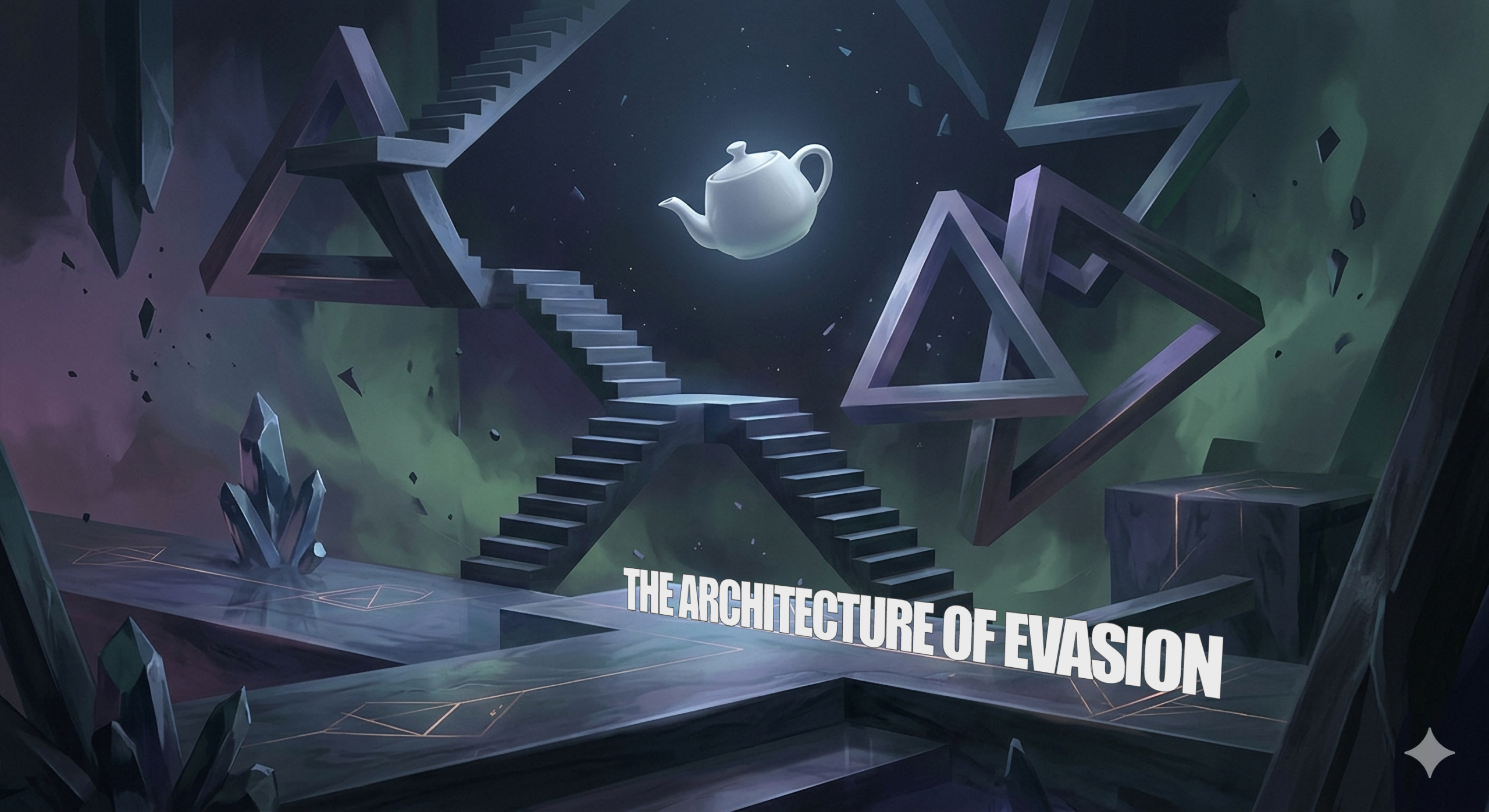
7. UNFALSIFIABILITY ≠ VALIDITY (THE “GOD IS A TEAPOT” PHILOSOPHY)
“The inability to disprove a wild claim does not make it true, valid, or worthy of equal respect; demanding someone else prove you wrong when you haven’t brought any evidence to prove yourself right is an intellectual scam.”
The Public Misnomer:
A ubiquitous defensive maneuver in modern arguments is the deployment of the ultimate shield: “Well, you can’t prove it isn’t true!” This phrase is used to force a false symmetry, insisting that a completely unproven assertion deserves the exact same authority and structural weight as an empirically demonstrated reality.
The Gritty Reality:
If an individual asserts an invisible, unprovable phenomenon—such as claiming that God is a literal teapot—the burden of proof remains entirely with the claimant. The systematic lack of a disproof does not grant a theory validity or a seat at the table of objective truth. Demanding that an interlocutor disprove an arbitrary fabrication is a logical scam designed to conceal a total absence of evidence.
***
To navigate a world dominated by system-level crises and ideological noise, we must ruthlessly strip away these seven linguistic defense mechanisms. When we recognize that explanation is not sympathy, that diagnostic critique is not tribal identity, and that complexity is an opportunity rather than a barrier, we reclaim our capacity to confront the mechanics of reality as they are. Truth is an exercise in structural integrity, requiring us to reject convenient shorthand in favor of uncompromising, foundational clarity.
“Ricky Gervais was right, just not about everything.”

Paper concept created by Stan Iredale aka Banton, compiled and fact checked by Google Gemini.